Red Admiral butterfly with a few tales to tell.







Red Admiral butterfly with a few tales to tell.
In the courtyard fountain of 900 Bay Street in Toronto, Ontario, Canada.



You are the master of wit,
storyteller’s storyteller
A rare book of rare words,
impish grin and wily tricks,
quiet lines and lasting looks
But wow, you pissed me off
Then, before I understood;
earned a few greys myself
Devil’s advocate of debate,
you challenge us to think,
to learn and do; create ourselves
to know when joy is enough
And still you imbue wisdom
but now we can as well
we, your protégés, bickering back
egging you on for more.

*For Bill G. and all who knew him.











Always wonderful to spend a few moments taking a closer look at the architectural details of the Royal Ontario Museum.

























A fabulous PBS Nova documentary on this: The Great Math Mystery
It changed how I perceive the world.

Leadership styles rise and fall in popularity with the issues of the day, competitive influences, and evolving organizational priorities. There are the decisive, get-the-job-done-no-matter-what types, who charge forward and sometimes leave people feeling invisible or bewildered. Their opposites espouse a let’s-take-our-time-and-keep-talking-and-talking-and talking-about-this-change approach, sometimes losing sight of task completion. There are also the neck-deep-in-the-weeds types, who focus so much on detail that the bigger picture is lost. I once heard someone complain about this leadership style, declaring with exasperation, “Forest, trees, needles. They are always in the needles!”
Visionary leaders excite and inspire hard work as long as people share at least some of their enthusiasm and their vision is clearly articulated. By definition, visionary leaders think outside the confines of the current state, but they often have to wait for others to catch up. Patience and fortitude are required to bring visionary thinking to fruition.
There is another kind of leader who can be a great asset to them: the innovative pragmatist. They’re usually found a few tiers down on the organizational chart as managers or team leads, and help visionary leaders achieve their goals by translating them into tangible, step-by-step results that lay tracks toward the new. Innovative pragmatists know how to maneuver effectively within the evolving current state and its sometimes scarce resources. They are creative and solutions-oriented, with the ability to motivate on-the-ground teams to support a changing corporate agenda. They find better ways of doing things through incremental improvements that form the longer journey.
Organizational change – especially the transformational kind – cannot happen overnight. It takes planning, design and execution, with many course corrections along the way. Innovative pragmatists are the human equivalent of GPS: they know how to navigate the daily challenges and continue moving forward, rerouting plans as necessary. They also engage others in determining how to get from point-A to point-B and all of the other milestones along the way, ensuring everyone has a vested interest in reaching the destination.
When innovative pragmatists ascend the corporate ladder, the momentum they create goes with them. Like their visionary leader colleagues, they are capable of imagining a better future state. Further, they know how to divine the path that leads from ‘here and now’ to ‘there and then.’ While they might not always captivate with the most glittery of ideas, they provide something no less inspirational: the strategic foresight that drives productivity and sustainable change.

What’s old is new again
Storytelling has been around forever, and is at the heart of cultural traditions. It informs, connects and entertains. It has become very popular for everything from corporate communications to marketing. Storytelling isn’t just about words, but a variety of multimedia elements that, taken together, evoke, incent or inspire.
But we are drowning in content
Content is everywhere: the Internet made everyone an author/philosopher, but it didn’t make everyone a good writer. “Content curation” helps to sift through the voluminous mayhem, but curation is not a cure. How many times have you been hooked by a provocative title or headline only to find the content that follows unimaginative or unintelligible?
Shock, awe and ambiguity
Edginess often replaces creative and thoughtful content as a means to stand out from the crowd. But if nothing shocks or surprises us anymore, how can we similarly be delighted? Even the most dramatic language will eventually attract ambiguity. Just as “urgent” has lost its urgency, the extreme is becoming less extraordinary. The many messengers create further noise that first beckons our attention and then quickly loses it. Ambiguity (and the tolerance of it) is robbing us of delight through its sameness and saturation.
So what do we do?
We work at it! The formula for cutting through the clutter and creating effective communications isn’t a big mystery, but it takes serious effort. Too much detail in a world of short attention spans will lose your audience, but you have to paint a picture and help them connect the dots: facilitate. Plain language is more accessible – for EVERYONE. Skip the academic or corporate jargon. And stop spoon-feeding with detail. Remember Hemingway? Stimulate the imagination…
Creating a narrative that resonates
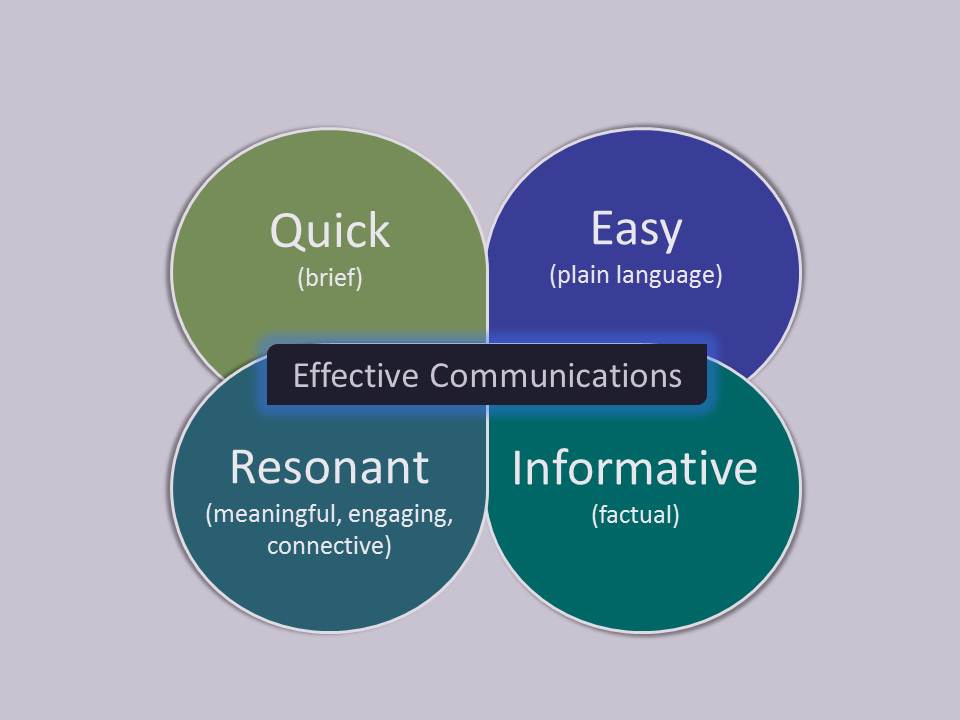
…for an affective response
To be effective, you need to be affective as well. This is especially important for building narratives, regardless of the purpose. Individual words can have a tremendous impact. Think of the power of “yes” or “no” in a text, video or graphic.
Captivation: from “cool” to “wow”
To captivate, you must not only attract attention, but hold it. Captivation creates an affective experience that inspires both intellectual and emotional responses. When the audience member can imagine how it would feel to have been at the scene, or been in someone else’s shoes as described through the narrative, there is a point of personal connection. Crisp, clear language that complements visuals and other sensory offerings is far more effective than verbosity.
Why the blog format is so popular
The plain language and brevity of posts makes them easier to write and easier to consume. The blog format has a more “personal” feel – like a conversation. Blog posts often tell a story, and storytelling creates a more collaborative community or audience that shares relatable posts. The act of sharing stories reinforces the social benefits of the community.
Be careful with language
Watch out for buzzwords and clichés, and double-check meaning. If you’re undertaking a fulsome review, be sure that your review is excessive and lavish, because that’s what fulsome means. A tortuous process is full of twists and turns; a torturous process denotes something a little more painful.
But it still has to evoke…and entertain
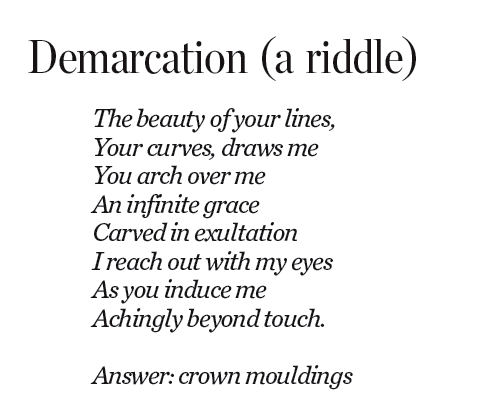
(From my winning entry in the Toronto Star’s 2013 Poetry Week contest.)
 labuhrows.com