








A fabulous PBS Nova documentary on this: The Great Math Mystery
It changed how I perceive the world.


What’s old is new again
Storytelling has been around forever, and is at the heart of cultural traditions. It informs, connects and entertains. It has become very popular for everything from corporate communications to marketing. Storytelling isn’t just about words, but a variety of multimedia elements that, taken together, evoke, incent or inspire.
But we are drowning in content
Content is everywhere: the Internet made everyone an author/philosopher, but it didn’t make everyone a good writer. “Content curation” helps to sift through the voluminous mayhem, but curation is not a cure. How many times have you been hooked by a provocative title or headline only to find the content that follows unimaginative or unintelligible?
Shock, awe and ambiguity
Edginess often replaces creative and thoughtful content as a means to stand out from the crowd. But if nothing shocks or surprises us anymore, how can we similarly be delighted? Even the most dramatic language will eventually attract ambiguity. Just as “urgent” has lost its urgency, the extreme is becoming less extraordinary. The many messengers create further noise that first beckons our attention and then quickly loses it. Ambiguity (and the tolerance of it) is robbing us of delight through its sameness and saturation.
So what do we do?
We work at it! The formula for cutting through the clutter and creating effective communications isn’t a big mystery, but it takes serious effort. Too much detail in a world of short attention spans will lose your audience, but you have to paint a picture and help them connect the dots: facilitate. Plain language is more accessible – for EVERYONE. Skip the academic or corporate jargon. And stop spoon-feeding with detail. Remember Hemingway? Stimulate the imagination…
Creating a narrative that resonates
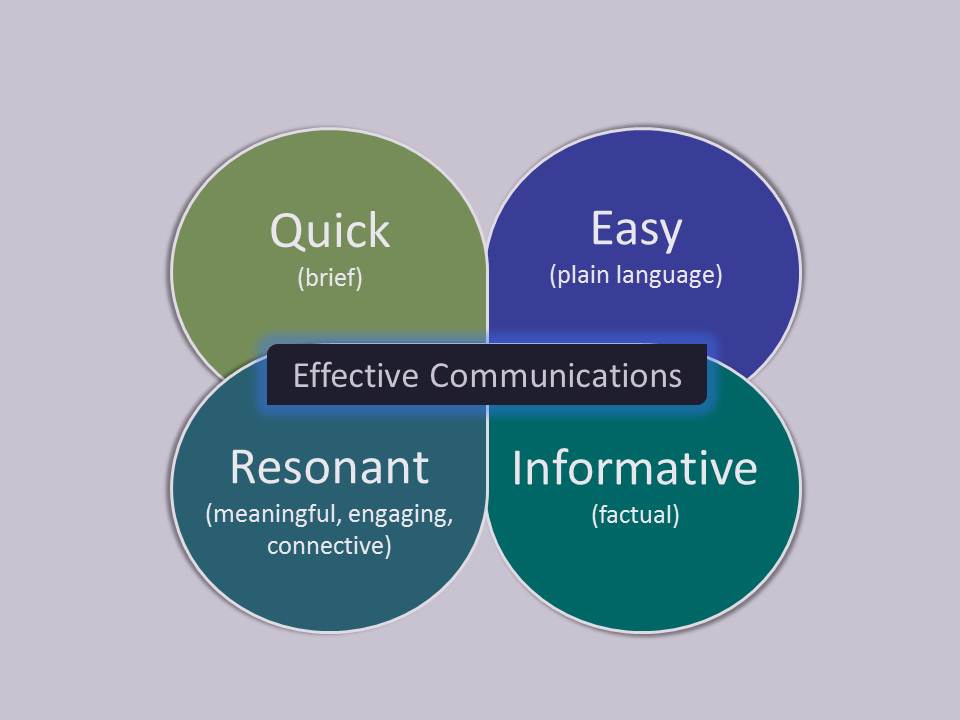
…for an affective response
To be effective, you need to be affective as well. This is especially important for building narratives, regardless of the purpose. Individual words can have a tremendous impact. Think of the power of “yes” or “no” in a text, video or graphic.
Captivation: from “cool” to “wow”
To captivate, you must not only attract attention, but hold it. Captivation creates an affective experience that inspires both intellectual and emotional responses. When the audience member can imagine how it would feel to have been at the scene, or been in someone else’s shoes as described through the narrative, there is a point of personal connection. Crisp, clear language that complements visuals and other sensory offerings is far more effective than verbosity.
Why the blog format is so popular
The plain language and brevity of posts makes them easier to write and easier to consume. The blog format has a more “personal” feel – like a conversation. Blog posts often tell a story, and storytelling creates a more collaborative community or audience that shares relatable posts. The act of sharing stories reinforces the social benefits of the community.
Be careful with language
Watch out for buzzwords and clichés, and double-check meaning. If you’re undertaking a fulsome review, be sure that your review is excessive and lavish, because that’s what fulsome means. A tortuous process is full of twists and turns; a torturous process denotes something a little more painful.
But it still has to evoke…and entertain
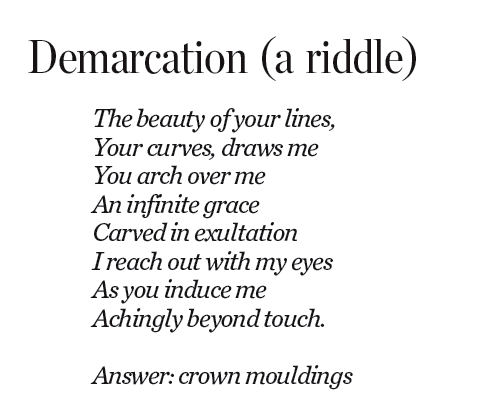
(From my winning entry in the Toronto Star’s 2013 Poetry Week contest.)


Whatever happened to those perfect jeans? The ones for class as well as for going out dancing? Back then, the latter typically meant “bar with dance floor” and no glittery club apparel was required. They were the “boyfriend-fit” blues; found in vintage stores and worn by someone else’s boyfriend many times before I acquired them.
Nothing could beat those softly distressed darlings that fit with a gentle but firm hug of the hips, loose enough on the waist to require a thick leather belt, and relaxed through the thigh. They left something to the imagination – a key ingredient often lacking in fashion these days – but were still decidedly fetching.
The few contemporary versions that dare to come calling by the same name are either “destroyed” through machine-made rips or very poor replicas of the original. They are not the comfortable-as-pajamas, relax-by-the-fireside variety worthy of a soft drink commercial.
Contrast the jeans of yore with the super-skinny leggings type that sadly continues to saturate the market. These show-it-alls somehow manage to be tighter than a second skin and often create unhappy results (witness the pervasive force of the “muffin-top”). They are truly the most unforgiving garments known to woman. And on men? Oh, please, no.
There are boot-cuts, I suppose, but they lack sit-ability. If you want to be comfortable in these, you’ll be standing. But boot-cuts are still preferable to their predecessor, the mega-flared bell-bottoms wide enough at the ankle to trip over the fabric and barely breatheable everywhere else. If they were boyfriend jeans, they’d be Robert Plant’s in 1974. And it took some serious rock star-quality guts and glory to pull them off – and to get them on in the first place, much like the designer jeans that followed in the early 80s.
The procedure for fastening freshly washed designer jeans was as follows: while flat on the bed, hold in your breath, suck in your gut and apply a metal hanger to hoist the zipper. There was no stretch in denim then, and you had to “break in” your jeans like shoes. Heaven help you if they went too long in the dryer.
But the modern-day 180-degree alternative, o dread, is the high-waist “mommy jeans” style reminiscent of the late-80s fashion blunders some of us barely survived the first time around. Sorry, but no.
I took the debate to my friends and while there was lively dialogue defending boyfriend-fit and boot-cut, there were no passionate nods to the super-skinnies, bell-bottoms or mommies. One woman summed it up nicely, saying she simply wanted something that made her assets look their – uh – its best.
After a multitude of fruitless web searches and in-store disappointments, I followed the proverbial yellow brick road to a certain she-she denim mecca. And there, as if I were a jubilant Dorothy clicking her heels together, I found the way home to my old boyfriend: the “low-rise loose.” Not only are they the perfect boyfriend-fit jeans, they are stonewashed to the point of feeling like silk – silk pajamas, that is. And I’m dancing again, even if it’s just around the kitchen.



David Bowie. The name evokes a vast array of haunting lyrics and flamboyant styles: flash and pop, fashion and fame, glitz and glam, art and artifice, and the blurring of forms.
For me, the image that always leapt to mind was him running out on stage in the “Modern Love” video, with perfect suit, tie undone, and bouncy 80s hair bopping along as he danced at the microphone. Though I was familiar with his earlier work by osmosis if nothing else, the “Let’s Dance” album was my first Bowie purchase and – perish the thought – on cassette. I might still have it, though after 30 years, it’s now an artifact itself; a glossy memory of adolescence and the beginnings of independence. My formal introduction was thus smack-dab in the middle of an extraordinary career of transition and transformation.
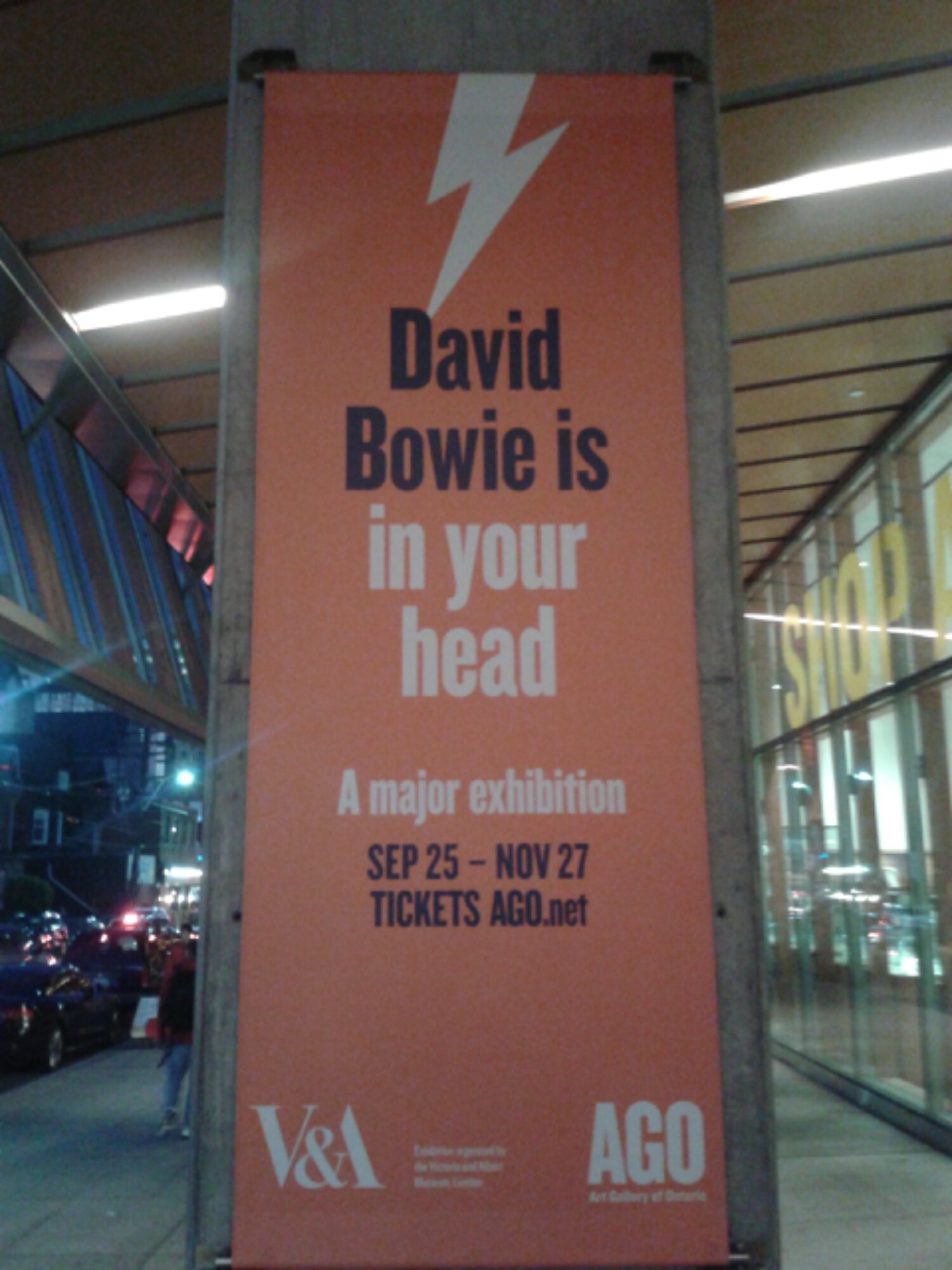
The David Bowie is exhibition at the Art Gallery of Ontario (and organized by the Victoria and Albert Museum) most assuredly filled in the before-and-after gaps. This is a show about art and language, and artful language; of poetry and literature, film and photography, all of which were contributions to the multi-layered imagery inherent in song and story.
There is so very much to see – and hear, of course (do partake of the headset) – a history of pop culture and the earlier icons who influenced his work and inspired his many personae. The art in the collection is astounding, particularly his own pieces, many of which will make you pause and study.
There is an exploration of inner space and outer space, presence and existentialism, with a multitude of costumes and set designs, creations and illustrations, telling time on a complex watch with time-machine movement. On the poster for the 1986 movie “Labyrinth” in which Bowie stars as the “Goblin King Jareth” are the words, “Where everything seems possible and nothing is what it seems.”
While there are certainly illusory elements in his work, they are purposefully so, which simply reinforces the undeniable intensity of expression that has influenced pop culture over the course of four decades. Plan to stay longer than you might think, because you’ll want to linger over the details in the narrative and under the glow of the video screens. You might even find yourself wanting to sway, while colour lights up your face.
Just a few highlights:
Favourite literary reference: D.H. Lawrence, Lady Chatterley’s Lover
Favourite photograph: David Bowie, Reality Sessions by Frank W. Ockensfels 3 (2003) – it’s near the end, by the way
Favourite fashion: Costume for Screaming Lord Byron – Jazzin’ for Blue Jean by designer Alison Chitty (1984)
Favourite gift shop item: Union Jack denim (Oh, I was tempted, but alas, they didn’t have my size!!!)
 labuhrows.com